
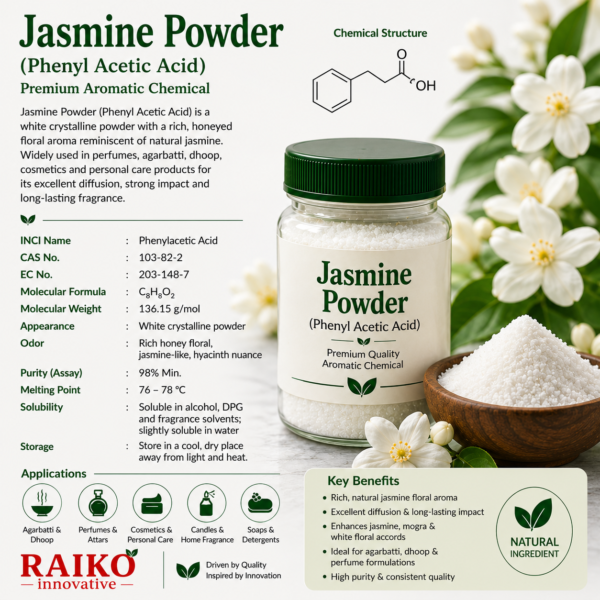
Jasmine Powder
Phenyl Acetic Acid
Common Name: Phenyl Acetic Acid (PAA)
Trade Name: Jasmine Powder (Perfumery Trade)
CAS No.: 103-82-2
Molecular Formula: C₈H₈O₂
Molecular Weight: 136.15 g/mol
Appearance: White to off-white crystalline powder
Solubility: Soluble in alcohol, DPG, and many fragrance solvents; only slightly soluble in water.
Odor Profile
- Rich honey-like floral
- Natural jasmine nuance
- Hyacinth-like
- Sweet floral with slight balsamic character
- Slightly animalic at higher concentrations
Perfumery Uses
Phenyl Acetic Acid is used in very small amounts to:
- Build realistic jasmine accords
- Enhance tuberose and white floral compositions
- Add natural honey sweetness
- Improve floral depth in rose, mogra, champaca, and lily fragrances
- Increase realism in incense and agarbatti floral perfumes
Recommended Dosage
| Application | Typical Level |
|---|---|
| Fine fragrance | 0.05–0.5% |
| Agarbatti perfume | 0.2–2% |
| Dhoop perfume | 0.3–2.5% |
| Jasmine accord | 0.5–3% |
Excessive use can make a fragrance smell medicinal or heavy.
Best Blends With
- Benzyl Acetate
- Phenyl Ethyl Alcohol
- Hedione
- Hydroxycitronellal
- Indole (trace levels)
- Methyl Anthranilate
- Linalool
- Benzyl Salicylate
- cis-Jasmone
- Galaxolide
Performance in Agarbatti
- Excellent burn stability
- Improves both cold throw and burning aroma
- Gives a more natural jasmine impression
- Especially useful in Mogra, Jasmine, Temple Flower, and White Floral incense blends
Storage
- Store tightly sealed in a cool, dry place.
- Protect from moisture and direct sunlight.
Professional Tip
For a high-quality commercial Mogra Agarbatti perfume, Phenyl Acetic Acid is typically combined with:
- Benzyl Acetate
- Hedione
- Hydroxycitronellal
- Phenyl Ethyl Alcohol
- Benzyl Salicylate
- Trace Indole
This combination produces a fuller, more natural jasmine character than using Benzyl Acetate alone.
Reviews
There are no reviews yet.