
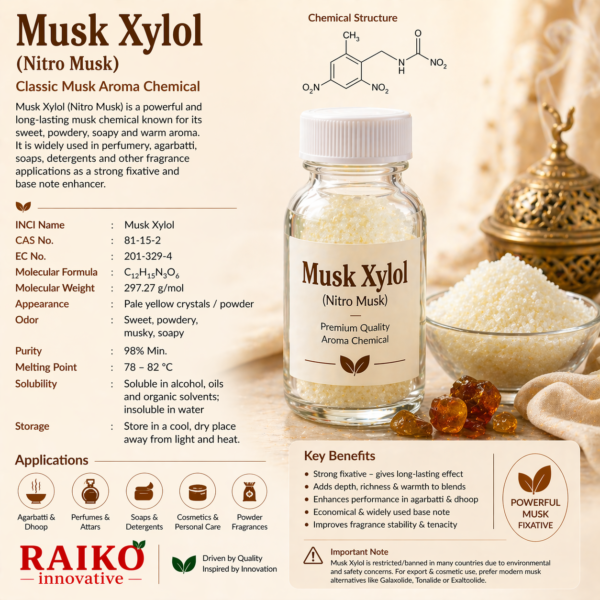
Musk xylene
Technical Details
INCI Name : Musk Xylol
CAS No. : 81-15-2
Molecular Formula : C₁₂H₁₅N₃O₆
Appearance : Pale yellow crystals / powder
Odor : Sweet, powdery, musky
Solubility : Soluble in alcohol & oils
🌿 Applications
- Agarbatti & dhoop compound ⭐
- Soap & detergent fragrance
- Attar & perfume base
- Powder fragrances
✅ Key Benefits
- Strong fixative (holds scent long) ⏳
- Gives depth & richness
- Enhances lasting power in burning products
- Cost-effective for bulk fragrance
⚠️ Important (Very Critical)
👉 Musk Xylol is restricted/banned in many countries
❗ Reasons:
- Environmental persistence
- Safety concerns
✔ In India: still used in some industrial applications
❌ For export / cosmetics: avoid
🔄 Better Alternatives (Recommended)
Use modern musks:
- Galaxolide → clean musk
- Tonalide → sweet musk
- Exaltolide → premium soft musk
👉 Same effect but safer + export-friendly
🔥 Pro Industry Tips
- Use low dose: 0.5% – 3%
- Best combinations:
- Musk Xylol + Vanillin → sweet base
- Musk Xylol + Sandalwood → creamy depth
- Musk Xylol + PEA → smooth floral musk
Reviews
There are no reviews yet.